Illegal sand trade around Jamuna raises questions over WDB engineer’s role
 Photo: TDS
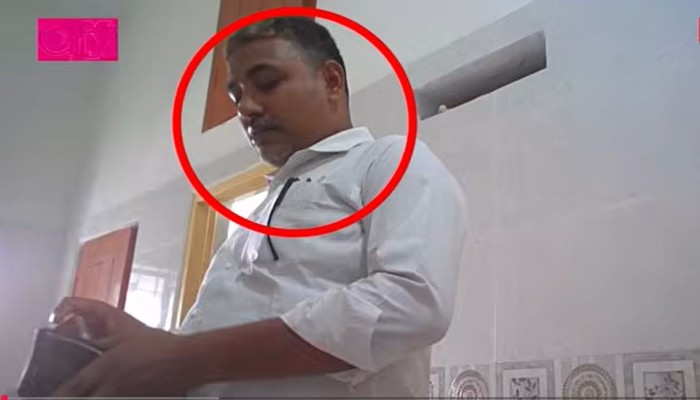
Illegal sand extraction and stockpiling on government land and public infrastructure around the Jamuna River in Sirajganj have raised serious questions over the role of the local Water Development Board (WDB), particularly its Executive Engineer Md Sajjad Hossain.
The controversy intensified after a mobile court recently fined three people Tk 1.30 lakh for illegally using government land belonging to the WDB and the Bangladesh Railway for storing and transporting sand at Ranigram, near Cross Bar-2.
The mobile court, conducted on Tuesday by the upazila administration, also ordered those involved to remove the stockpiled sand from the site within 20 days.
The action came after a private television channel aired a report on the alleged illegal activities, which subsequently went viral on social media, triggering criticism of the local administration, according to sources.
However, the mobile court action has failed to quell public anger, with local residents questioning why no visible action has been taken against WDB Executive Engineer Md Sajjad Hossain, despite allegations that illegal sand extraction and stockpiling have been taking place for a long time.
Sajjad has denied allegations that he facilitated illegal sand extraction or allowed sand traders to use government land and infrastructure.
The allegations against the WDB official could not be independently verified. However, the mobile court's action has confirmed at least some instances of unauthorised use of government land for sand-related activities.
SAND STOCKPILED ON EMBANKMENTS, RAILWAY LAND
Unregulated sand extraction from vulnerable sections of the Jamuna and the subsequent stockpiling of sand on government land, riverbank protection embankments, roads and near residential areas have become a growing concern in Sirajganj.
A recent visit to several locations found large quantities of sand stockpiled on and around the WDB's right-bank protection embankment in Ranigram, Kobdas Para and Gunerghati areas.
Sand was also reportedly being stored by filling government-owned ponds, along regional roads and near residential settlements.
Local residents said the activities have been continuing for years under the nose of WDB officers despite repeated complaints, causing dust pollution, obstructing roads and creating environmental and public-safety hazards.
The transportation of sand by hundreds of bulkhead boats has also emerged as a major concern. Residents alleged that the large waves generated by the vessels repeatedly hit riverbanks and nearby protection structures, potentially weakening them.
Uncovered trucks carrying sand through roads in and around Sirajganj town are also generating dust and creating risks for pedestrians and other road users.
EXTRACTION ALLEGEDLY BEYOND DESIGNATED AREAS
Locals alleged that sand is being extracted from areas outside designated sand-mining zones and transported to different parts of the district for commercial purposes.
They further alleged that politically influential groups have been backing the sand trade since the July-August uprising and that some officials including district administration have remained inactive despite being aware of the activities.
The issue is particularly sensitive in Sirajganj, where large stretches of the Jamuna riverbank remain vulnerable to erosion. Any weakening or damage to riverbank protection works could expose nearby settlements, roads and government installations to further erosion.
Repeated damage to public infrastructure could also force the government to spend additional public funds on repairs and reconstruction.
LAW BARS EXTRACTION NEAR VITAL INFRASTRUCTURE
The Sand and Soil Management Act, 2010 prohibits the extraction or storage of sand and soil within specified distances of bridges, culverts, dams, barrages, embankments, roads, highways, forests, railway lines and other important public and private infrastructure, as well as in or near residential areas.
Violations of the law are punishable by imprisonment and fines.
Despite the legal restrictions, residents allege that sand extraction and stockpiling continue in several parts of Sirajganj.
‘Everyone is being managed’
Some sand traders, meanwhile, admitted to using government land for storing sand, saying they had no private land available for the purpose.
“We do business after managing everyone concerned. If the government has no problem with us using government land, why should journalists have a problem?” one trader said.
Sand trader Zahurul Islam claimed that they were conducting the business under the patronage of an influential person and most of the senior officials were aware of the activities. But we all face problem, when journalists publish any news on it.
Local residents also alleged that some officials receive regular payments from the sand trade in exchange for turning a blind eye to violations. There have also been allegations that journalists faced threats after publishing reports on illegal sand extraction and trading.
EROSION THREAT LOOMS
Environmental observers and residents fear that indiscriminate extraction could alter the river's natural flow and destabilise its banks, aggravating erosion in already vulnerable areas.
They are particularly concerned about extraction and heavy bulkhead movement close to riverbank protection structures.
Residents said a single mobile court operation would not be enough to stop an activity that has allegedly continued for years. They called for regular monitoring, removal of illegally stockpiled sand from government land and embankments, and stronger enforcement against unauthorised extraction and transportation.
They also demanded an investigation into whether any government officials or influential individuals have facilitated or benefited from the illegal sand trade.
Without sustained enforcement, residents fear that unchecked sand extraction and transportation will continue to threaten public infrastructures, aggravate river erosion and ultimately increase the government's financial burden on protecting Sirajganj's vulnerable riverine areas.
By Rehennuma Tarannum

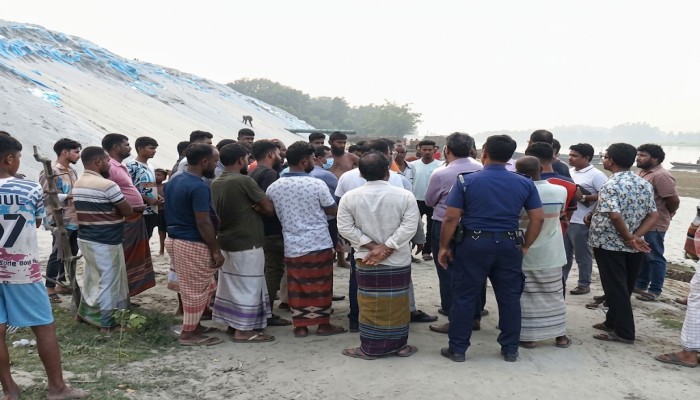 Photo: TDS